
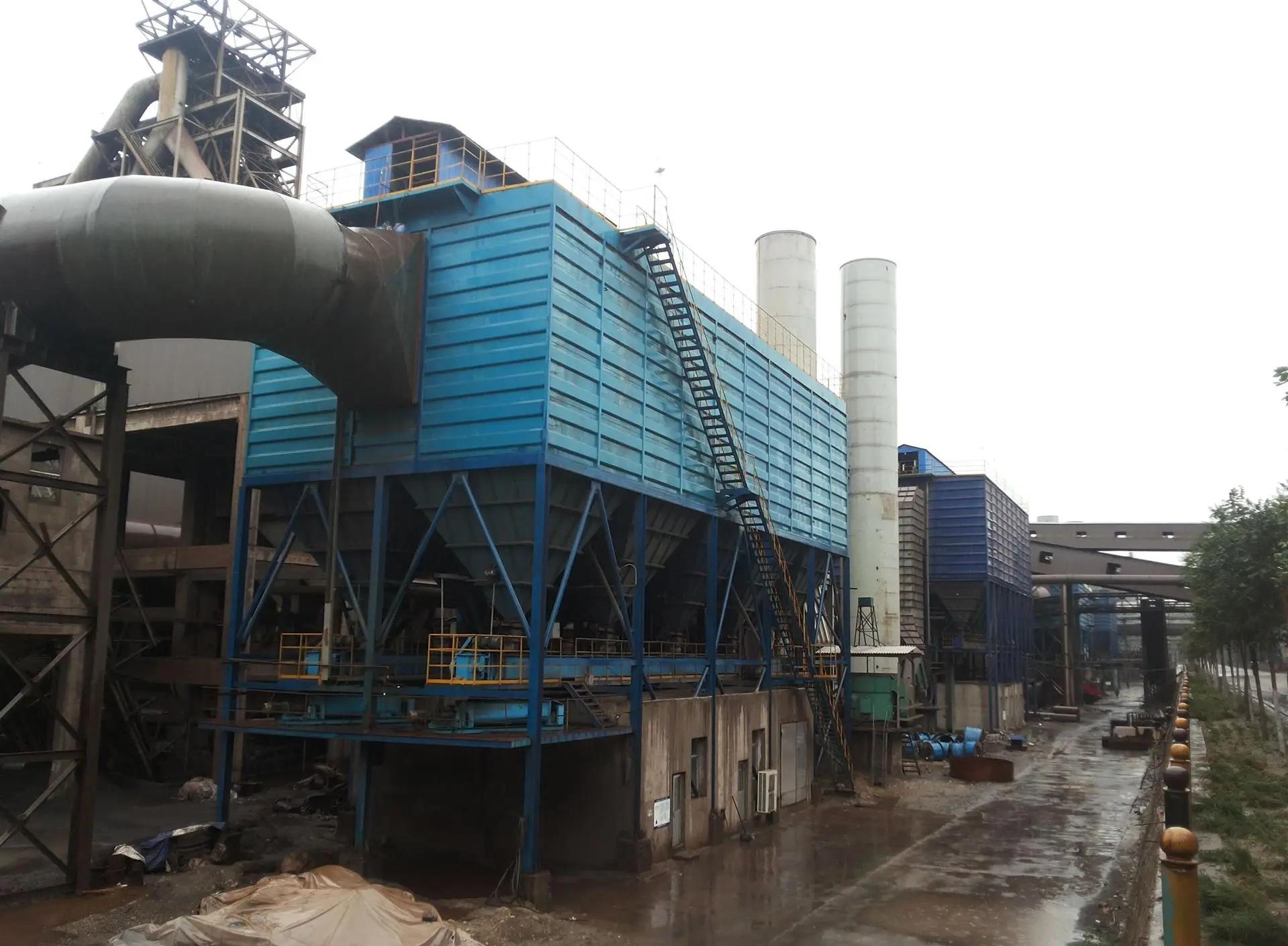
Filter Bag Wear in Crusher Dust Collectors and How to Select the Correct Filter Bag Material
In crushing systems used in cement plants, mining industry, quarry operations, and aggregate production lines, the dust collector plays an important role in controlling heavy dust emissions.
Among all dust collector components, the filter bag is the core filtering element and also one of the most easily damaged parts.
Many dust collector failures are not caused by the equipment itself, but by incorrect filter bag material selection or severe operating conditions inside the crusher system.
This article explains the main reasons for filter bag wear in crusher dust collectors and how to select suitable filter bag materials for different working conditions.
Why Crusher Dust Collection Systems Cause Serious Filter Bag Wear
Crusher dust is very different from ordinary industrial dust.
Inside a crushing system, the filter bag usually faces:
- High dust concentration
- Sharp and abrasive particles
- Strong airflow impact
- Continuous vibration
- High humidity in some processes
- Sudden temperature fluctuation
These conditions can rapidly damage ordinary filter bags if the material selection is incorrect.
Main Causes of Filter Bag Damage in Crusher Dust Collectors
Mechanical Abrasion
Mechanical abrasion is one of the most common problems in crusher dust collectors.
Large particles and sharp dust continuously hit the filter bag surface at high speed.
This causes:
- Surface wear
- Fiber breakage
- Thin spots
- Holes at the bag bottom
- Damage near the cage contact area
This problem is especially serious in:
- Limestone crushers
- Clinker crushers
- Ore crushing systems
- Sand and aggregate production lines
Typical Signs
- Rapid decrease in filter bag thickness
- Local damage at the air inlet area
- Broken fibers on the surface
- Short service life
Excessive Air Velocity
If filtration velocity is too high, dust particles strike the filter bag more aggressively.
This leads to:
- Faster abrasion
- Increased pressure difference
- Difficult dust cleaning
- Premature filter bag failure
Improper air distribution inside the dust collector can also create local airflow concentration, which damages specific rows of filter bags.
High Moisture and Condensation
Crusher systems sometimes handle wet materials or operate in humid environments.
When condensation occurs:
- Dust sticks to the filter bag surface
- Dust cake becomes hard
- Cleaning efficiency decreases
- Pressure difference increases rapidly
Moisture can also cause:
- Bag hardening
- Fiber degradation
- Corrosion of filter cages
High Temperature Fluctuation
In some crushing systems, especially clinker crushing and hot material handling, inlet temperature may fluctuate significantly.
If the selected material cannot withstand the actual temperature:
- Fibers become brittle
- Thermal shrinkage occurs
- Surface cracking appears
- Filter bags fail prematurely
How to Select the Correct Filter Bag Material
Correct material selection should always be based on:
- Operating temperature
- Dust abrasiveness
- Moisture level
- Chemical composition
- Airflow conditions
Different crusher systems require different materials.
Polyester Needle Felt Filter Bags
Polyester needle felt is widely used in normal temperature crushing systems.
Advantages
- Economical cost
- Good mechanical strength
- Stable dimensional performance
- Suitable for dry dust conditions
Suitable Applications
- Limestone crushing
- Aggregate production
- Dry material handling
Limitations
- Not suitable for high-temperature conditions
- Poor resistance to hydrolysis under high humidity
Polypropylene Needle Felt Filter Bags
Polypropylene needle felt has excellent chemical resistance.
Advantages
- Good resistance to acids and alkalis
- Low moisture absorption
- Smooth dust release performance
Suitable Applications
- Chemical dust collection
- High humidity environments
- Corrosive dust conditions
Limitations
- Lower temperature resistance
- Not suitable for hot gas conditions
Aramid Needle Felt Filter Bags
Aramid needle felt is suitable for medium temperature crusher systems.
Advantages
- Good heat resistance
- Excellent dimensional stability
- Good abrasion resistance
Suitable Applications
- Clinker crushers
- Hot material handling systems
- Medium temperature dust collectors
Limitations
- Sensitive to high humidity and acid conditions
- Higher cost than polyester
Polyphenylene Sulfide Needle Felt Filter Bags
Polyphenylene sulfide filter bags are widely used in harsh industrial conditions.
Advantages
- Excellent heat resistance
- Good chemical resistance
- Stable performance under acidic conditions
Suitable Applications
- Coal crushing systems
- High sulfur environments
- Cement plant applications
Limitations
- Sensitive to strong oxidation conditions
Polytetrafluoroethylene Filter Bags
Polytetrafluoroethylene filter bags provide excellent overall performance under extremely harsh conditions.
Advantages
- Outstanding chemical resistance
- Excellent temperature resistance
- Very long service life
- Excellent corrosion resistance
Suitable Applications
- Highly corrosive environments
- High temperature systems
- Demanding industrial conditions
Limitations
- Higher initial investment cost
Importance of Surface Treatment
In crusher dust collection systems, surface treatment is also extremely important.
Common treatments include:
- Polytetrafluoroethylene membrane lamination
- Water and oil repellent treatment
- Anti-static treatment
- Heat setting treatment
These treatments can improve:
- Dust release performance
- Cleaning efficiency
- Moisture resistance
- Service life
Common Mistakes in Filter Bag Selection
Selecting Only by Temperature
Many users only consider operating temperature and ignore:
- Dust abrasiveness
- Moisture
- Chemical composition
- Airflow impact
This often causes premature failure.
Ignoring Abrasion Resistance
Crusher dust usually contains sharp particles.
If abrasion resistance is insufficient, the filter bag may fail quickly even under normal temperature conditions.
Ignoring Working Condition Changes
Actual operating conditions may differ from design conditions.
For example:
- Unexpected moisture increase
- Temperature fluctuation
- Increased dust concentration
These changes may require upgraded filter bag materials.
Conclusion
Crusher dust collectors operate under severe working conditions, including heavy abrasion, high dust concentrations, and unstable operating environments.
Correct filter bag selection is critical for:
- Stable filtration performance
- Reduced maintenance cost
- Longer service life
- Lower system pressure difference
When selecting filter bag materials, it is important to evaluate the full operating conditions rather than temperature alone.
A suitable combination of filter bag material, surface treatment, airflow design, and operating control can significantly improve the reliability and efficiency of crusher dust collection systems.