Waste Incineration Industry
Waste Incineration Industry Overview
Waste incineration plays a key role in today's waste management systems. Its main functions are:
Volume reduction – Drastically cuts down the amount of municipal and industrial waste, reducing reliance on landfills.
Energy generation – Many incinerators function as Waste-to-Energy (WTE) plants, using combustion heat to produce electricity or district heating.
Emission control – Reduces environmental harm by limiting landfill methane emissions and treating flue gases before discharge.
The growing global waste crisis and the shortcomings of landfilling drive the need for incineration. Key factors include:
Land scarcity – Dense urban areas with limited space turn to incineration as a practical alternative.
Stricter regulations – Modern facilities use advanced gas cleaning systems to meet emission standards.
Resource recovery – Valuable metals and other residues from incineration can be reclaimed, feeding into circular economy models.
Volume reduction – Drastically cuts down the amount of municipal and industrial waste, reducing reliance on landfills.
Energy generation – Many incinerators function as Waste-to-Energy (WTE) plants, using combustion heat to produce electricity or district heating.
Emission control – Reduces environmental harm by limiting landfill methane emissions and treating flue gases before discharge.
The growing global waste crisis and the shortcomings of landfilling drive the need for incineration. Key factors include:
Land scarcity – Dense urban areas with limited space turn to incineration as a practical alternative.
Stricter regulations – Modern facilities use advanced gas cleaning systems to meet emission standards.
Resource recovery – Valuable metals and other residues from incineration can be reclaimed, feeding into circular economy models.
Production Process, Application Points & Specific Machines
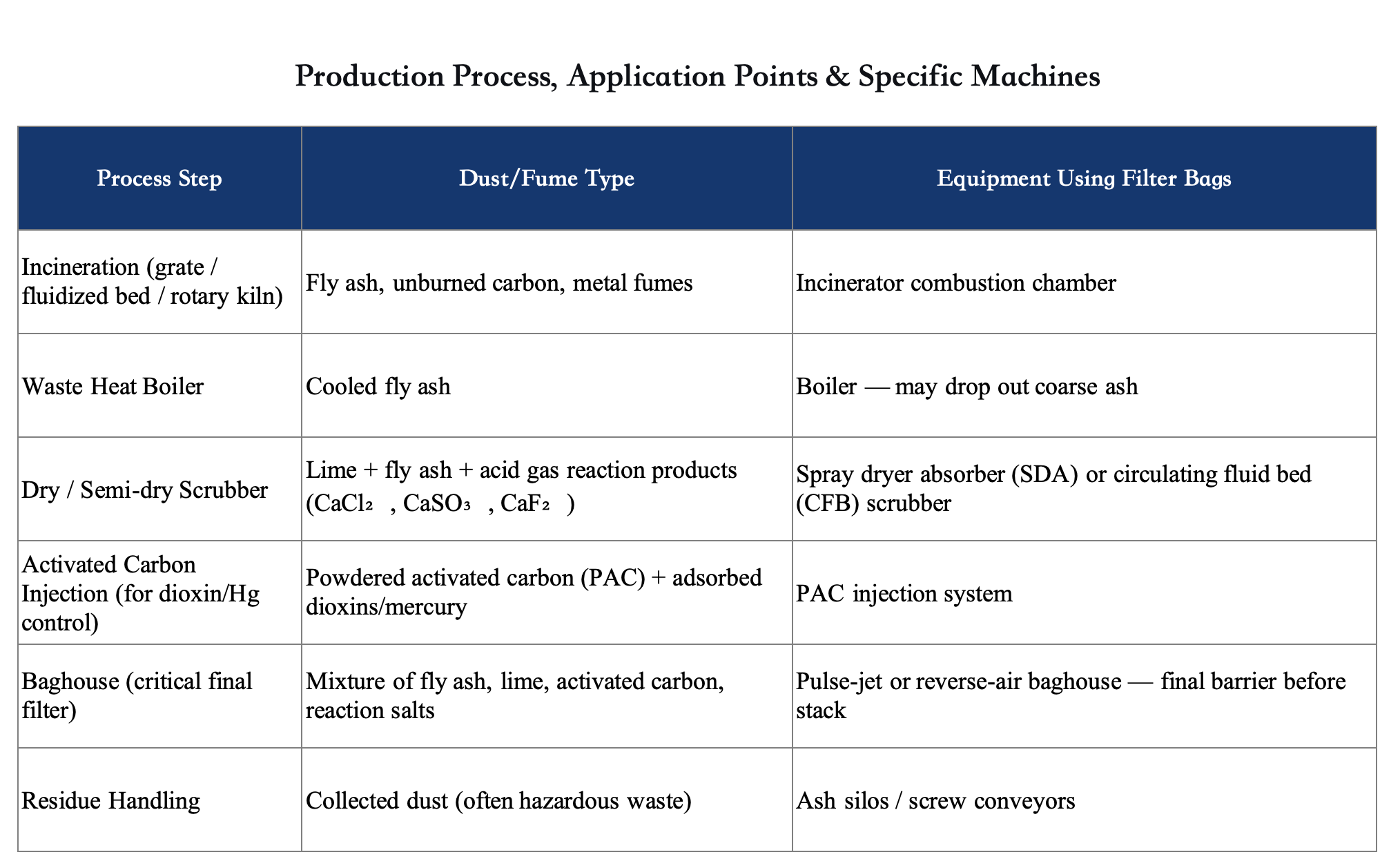
Production Step
1. Incineration (grate / fluidized bed / rotary kiln)
2. Waste Heat Boiler
3. Dry / Semi-dry Scrubber
4. Activated Carbon Injection (for dioxin/Hg control)
5. Baghouse (critical final filter)
6. Residue Handling
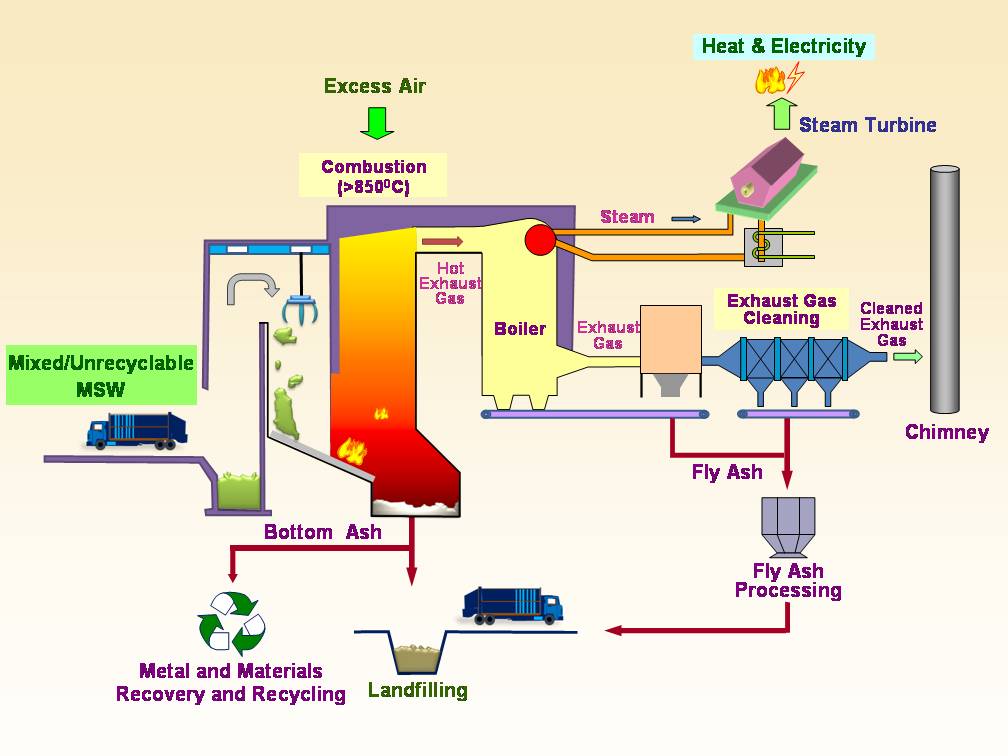
The right picture shows the production process and the related equipment applied to air dust collectors
1. Incineration (grate / fluidized bed / rotary kiln)
2. Waste Heat Boiler
3. Dry / Semi-dry Scrubber
4. Activated Carbon Injection (for dioxin/Hg control)
5. Baghouse (critical final filter)
6. Residue Handling
The right picture shows the production process and the related equipment applied to air dust collectors
Recommended Filter Bags By Incinerator Type
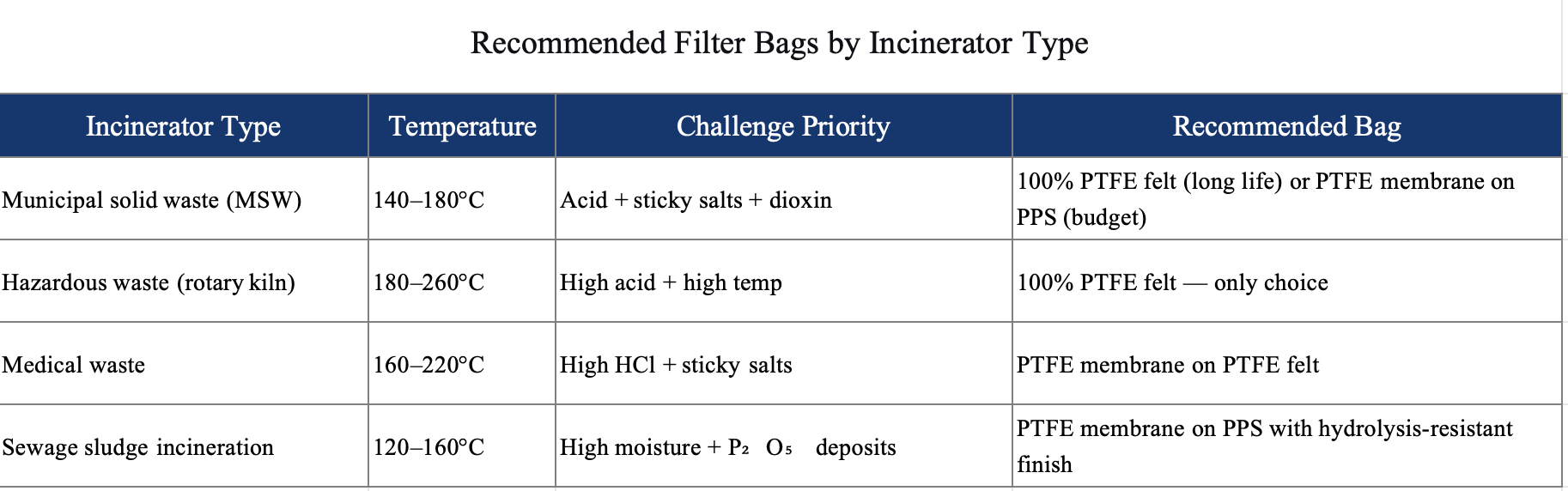
there are several incinerator types
1. Municipal solid waste (MSW) 140–180°C
2. Hazardous waste (rotary kiln) 180–260°C
3. Medical waste 160–220°C
4. Sewage sludge incineration 120–160°C
1. Municipal solid waste (MSW) 140–180°C
2. Hazardous waste (rotary kiln) 180–260°C
3. Medical waste 160–220°C
4. Sewage sludge incineration 120–160°C
Dust Collection challenges
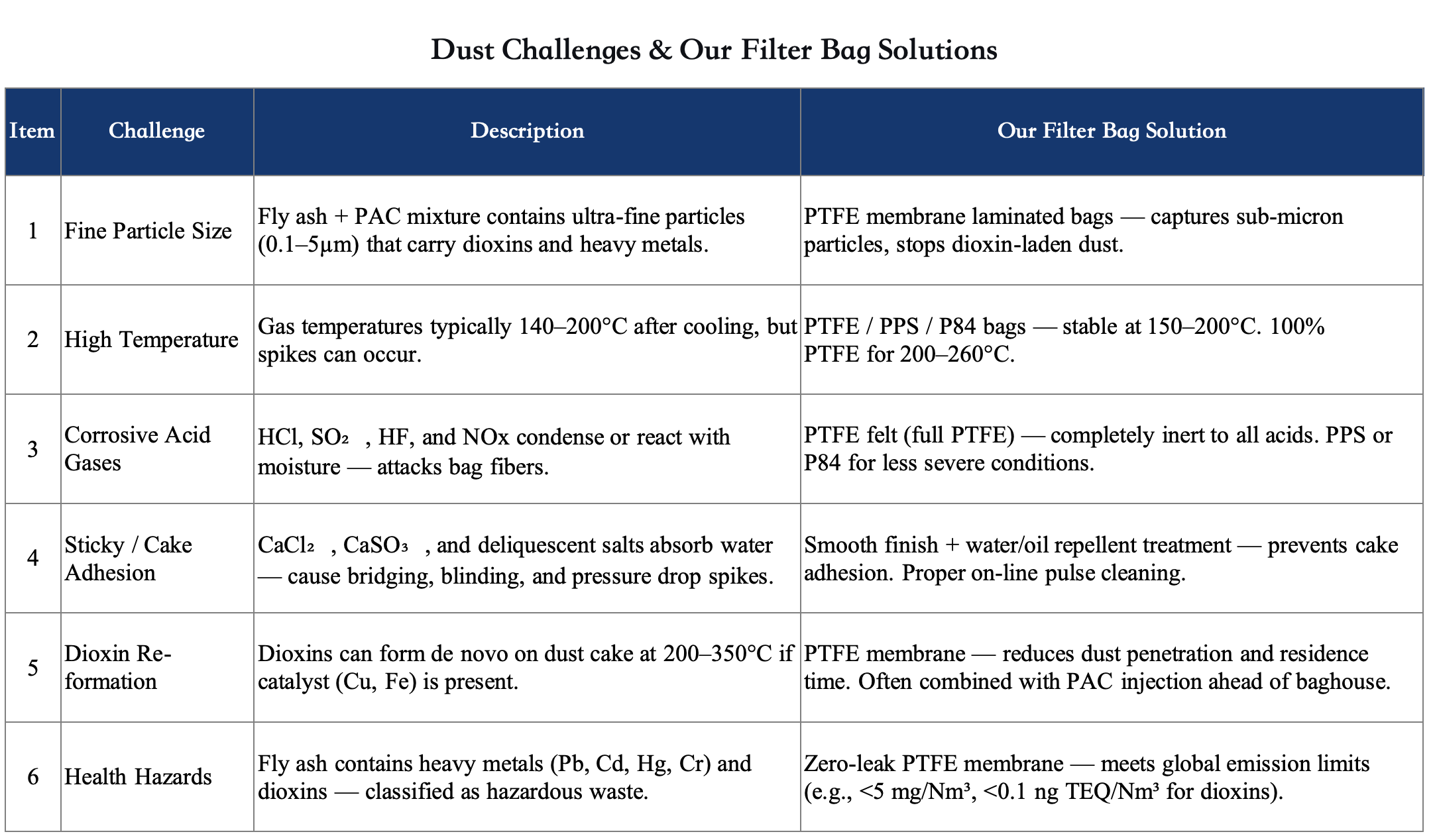
Baghouse dust collection is one of the most effective methods for controlling particulate emissions in waste incineration plants, but it faces several operational challenges .Filter Bags for Waste Incineration Plants challenges include:
1. High-Temperature and Corrosive Gas Exposure
1.1 Heat Resistance: Flue gases from waste incineration can reach extremely high temperatures, requiring baghouse filters made from heat-resistant materials like fiberglass, PPS, or PTFE.
1.2 Chemical Corrosion: Acidic gases (HCl, SO₂, NOₓ) and moisture can degrade filter bags over time, leading to premature failure and increased maintenance costs.
1.3 Bag Coatings and Treatments: Specialized chemical-resistant coatings or membrane layers (e.g., PTFE lamination) are needed to enhance durability.
2. Fine and Sticky Particulate Matter
2.1 Ultrafine Dust Collection: Waste incineration generates extremely fine particles (PM2.5 and below), which can pass through standard filter media if not properly designed.
2.2 Sticky Residues: Certain combustion byproducts, such as unburned carbon and tar-like substances, can cause filter bags to clog, reducing airflow and efficiency.
2.3 Frequent Cleaning Requirements: Pulse-jet cleaning systems must be optimized to prevent excessive dust cake buildup while maintaining filtration performance.
3. Baghouse Maintenance and Operational Challenges
3.1 Filter Bag Wear and Tear: High dust loading, abrasion from fly ash, and frequent pulse-jet cleaning can lead to mechanical wear, requiring regular bag replacements.
3.2 Pressure Drop Issues: Accumulated dust on the filter bags increases resistance to airflow, leading to higher energy consumption and reduced system efficiency.
3.3 Ash Disposal and Handling: Collected dust may contain hazardous substances (e.g., heavy metals, dioxins), requiring special handling and disposal procedures.
To overcome these challenges, baghouse systems in waste incineration plants must be designed with high-performance filter media, optimized cleaning mechanisms, and robust corrosion-resistant components. Regular monitoring and maintenance are essential to ensure long-term efficiency and compliance with environmental regulations.Therefore, our Filter Bags for Waste Incineration series was developed accordingly.
1. High-Temperature and Corrosive Gas Exposure
1.1 Heat Resistance: Flue gases from waste incineration can reach extremely high temperatures, requiring baghouse filters made from heat-resistant materials like fiberglass, PPS, or PTFE.
1.2 Chemical Corrosion: Acidic gases (HCl, SO₂, NOₓ) and moisture can degrade filter bags over time, leading to premature failure and increased maintenance costs.
1.3 Bag Coatings and Treatments: Specialized chemical-resistant coatings or membrane layers (e.g., PTFE lamination) are needed to enhance durability.
2. Fine and Sticky Particulate Matter
2.1 Ultrafine Dust Collection: Waste incineration generates extremely fine particles (PM2.5 and below), which can pass through standard filter media if not properly designed.
2.2 Sticky Residues: Certain combustion byproducts, such as unburned carbon and tar-like substances, can cause filter bags to clog, reducing airflow and efficiency.
2.3 Frequent Cleaning Requirements: Pulse-jet cleaning systems must be optimized to prevent excessive dust cake buildup while maintaining filtration performance.
3. Baghouse Maintenance and Operational Challenges
3.1 Filter Bag Wear and Tear: High dust loading, abrasion from fly ash, and frequent pulse-jet cleaning can lead to mechanical wear, requiring regular bag replacements.
3.2 Pressure Drop Issues: Accumulated dust on the filter bags increases resistance to airflow, leading to higher energy consumption and reduced system efficiency.
3.3 Ash Disposal and Handling: Collected dust may contain hazardous substances (e.g., heavy metals, dioxins), requiring special handling and disposal procedures.
To overcome these challenges, baghouse systems in waste incineration plants must be designed with high-performance filter media, optimized cleaning mechanisms, and robust corrosion-resistant components. Regular monitoring and maintenance are essential to ensure long-term efficiency and compliance with environmental regulations.Therefore, our Filter Bags for Waste Incineration series was developed accordingly.