Renewable Energy INDUSTRY
Lithium Battery Production & End-of-Life (EOL) Equipment Recycling
Li Battery Production Industry Overview
The lithium battery market is booming, driven by EVs and energy storage. Production of cathodes, anodes, and cells generates large volumes of fine, hazardous, and often combustible dust. Strict air quality and safety regulations make high-efficiency dust collection mandatory.
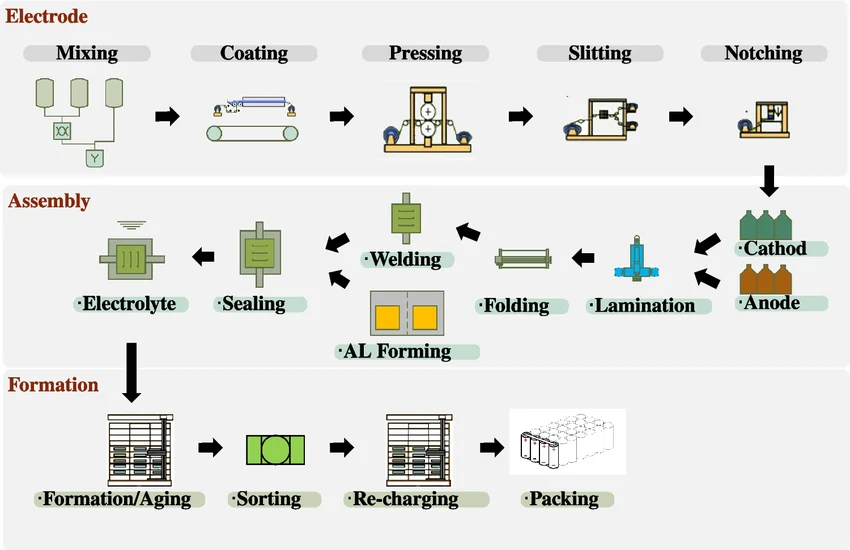
Production Process
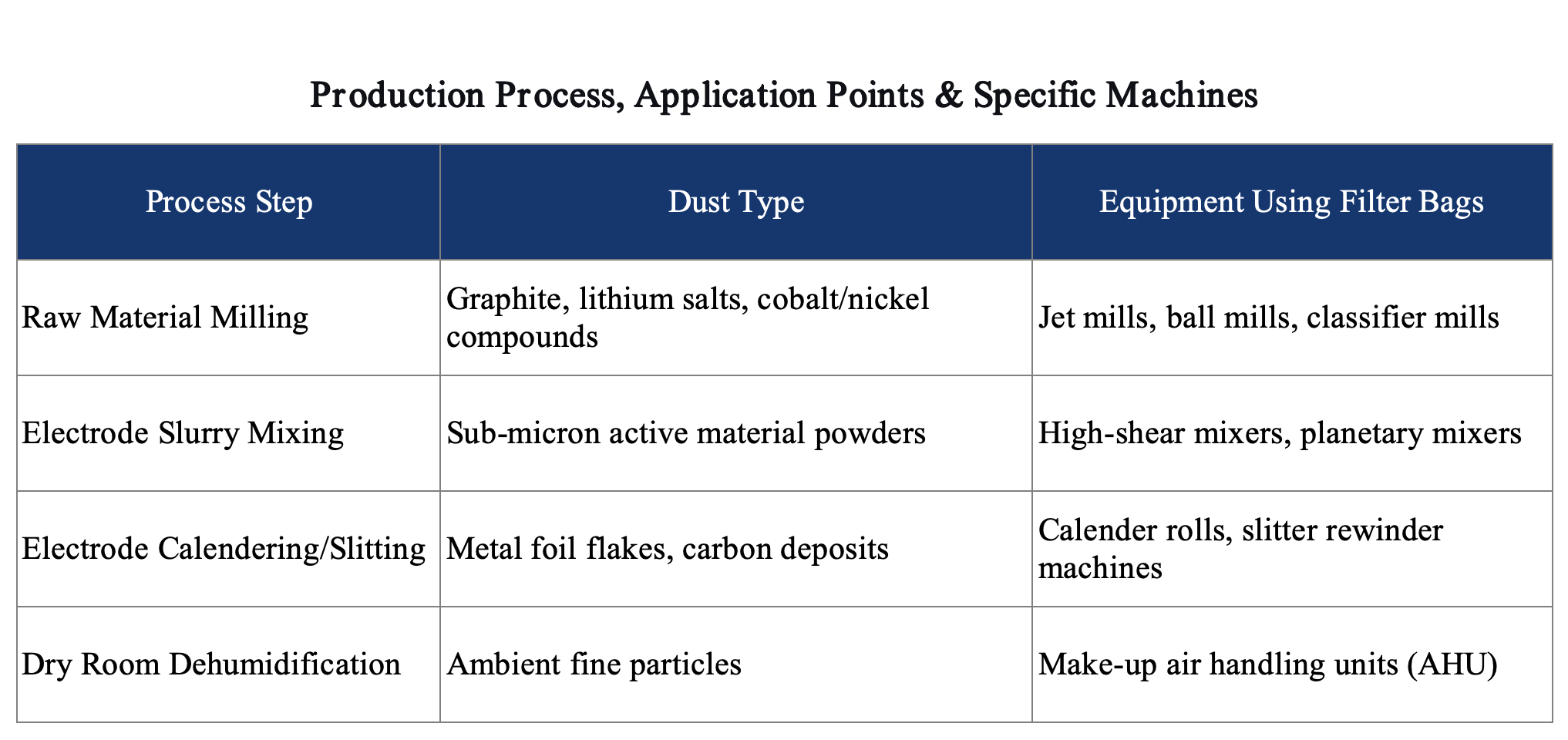
1. Raw Material Milling
2. Electrode Slurry Mixing
3. Electrode Calendering/Slitting
4. Dry Room Dehumidification
So let's take a look at the related machines that require the use of air dust collectors. Please refer to the image on the right for details
2. Electrode Slurry Mixing
3. Electrode Calendering/Slitting
4. Dry Room Dehumidification
So let's take a look at the related machines that require the use of air dust collectors. Please refer to the image on the right for details
Current Dust Problems & Our Filter Bag Solutions
Raw material handling and processing for lithium-ion and other types of batteries create significant hazards and challenges. Mining, processing, and preparing materials for battery production, such as lithium, cobalt, nickel, graphite, and copper, can involve large quantities of toxic, fine, and combustible dust. In addition, electrode production is one of the dustiest parts of the battery manufacturing process. Dust is created during several processes for both cathode and anode preparation, including material preparation and mixing, slurry preparation, calendering, and slitting. Lithium dust is both combustible and reactive. This fine particulate material has the following characteristics:
1. Fine Particle Size
2. Lighweight
3. Poor Flow Characteristics
4. Reactivity
5. Flammbility
6. Health Hazards
The challenges of lithium dust require careful design and planning to build a proficient dust collection system to control it.
1. Fine Particle Size
2. Lighweight
3. Poor Flow Characteristics
4. Reactivity
5. Flammbility
6. Health Hazards
The challenges of lithium dust require careful design and planning to build a proficient dust collection system to control it.

End-of-Life (EOL) Equipment Recycling Industry Overview
Mandatory recycling of retired wind turbine blades, solar panels, and lithium batteries is creating a new pollution control market. Recycling processes—shredding, thermal treatment, and material separation—all generate heavily polluted airstreams that require robust filtration.

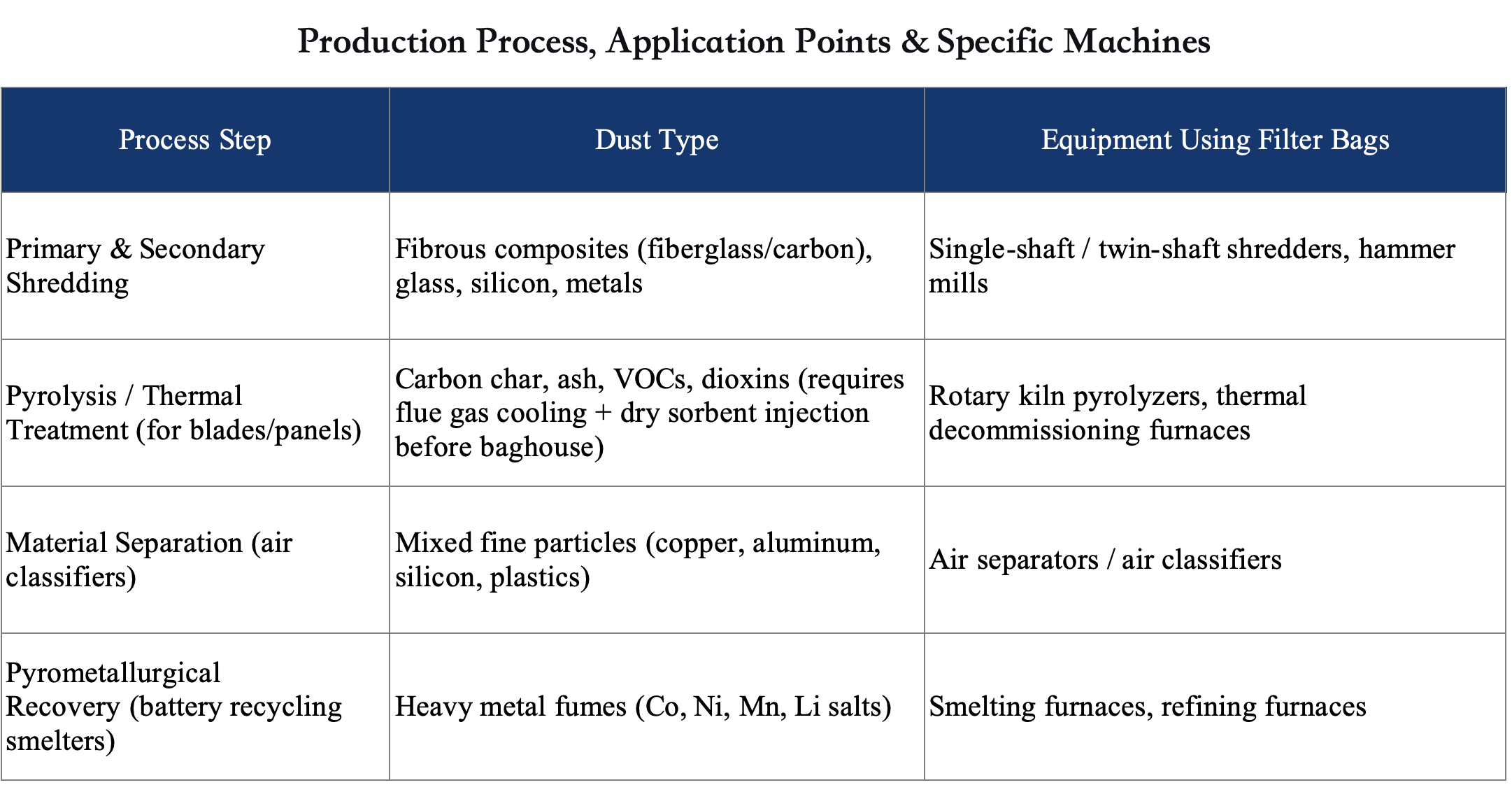
Production Process
1. Primary & Secondary Shredding
2. Pyrolysis / Thermal Treatment (for blades/panels)
3. Material Separation (air classifiers)
4. Pyrometallurgical Recovery (battery recycling smelters)
The right picture shows the machines used in the production process (please)
2. Pyrolysis / Thermal Treatment (for blades/panels)
3. Material Separation (air classifiers)
4. Pyrometallurgical Recovery (battery recycling smelters)
The right picture shows the machines used in the production process (please)