
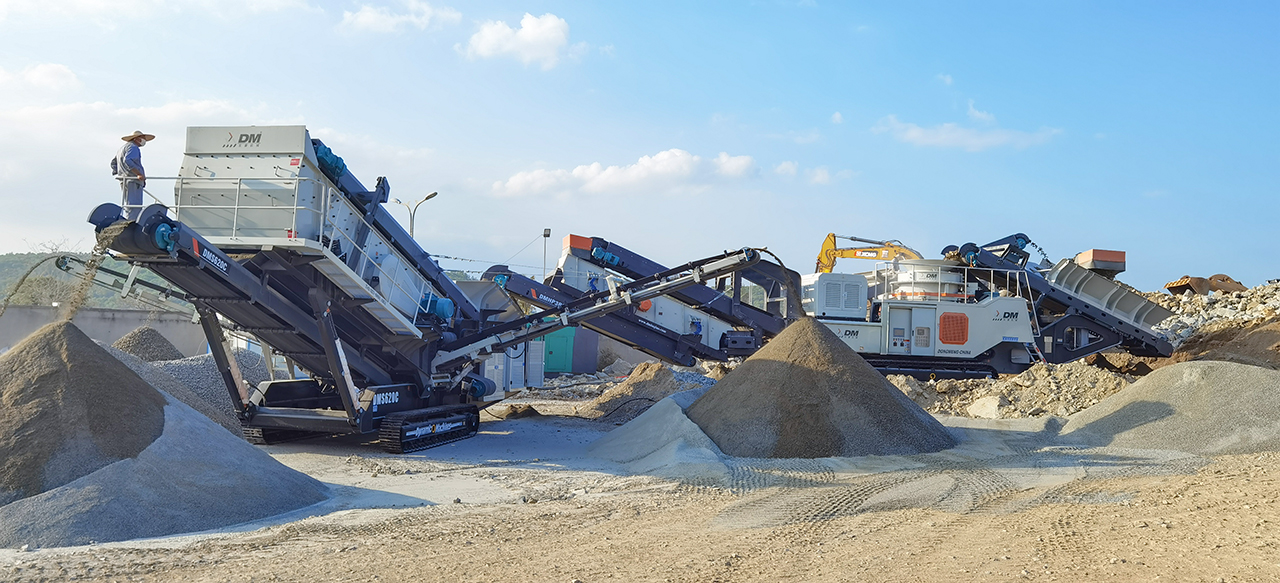
Filter Bag Selection for Sand Making Machines and Mobile Crushing Station Dust Collectors
In modern aggregate production lines, sand making machines and mobile crushing stations generate large amounts of dust during crushing, screening, shaping, and material conveying processes.
To meet environmental requirements and maintain stable production conditions, bag filter dust collectors are widely used in these systems.
Among all dust collector components, the filter bag is the core filtering element.
Its material selection directly affects:
- Dust collection efficiency
- Pressure difference stability
- Equipment operating reliability
- Maintenance frequency
- Filter bag service life
- Overall operating cost
However, the operating conditions inside sand making machines and mobile crushing stations are extremely demanding.
Strong airflow impact, high dust concentration, abrasive particles, vibration, and unstable outdoor environments can rapidly damage unsuitable filter bags.
Therefore, selecting the correct filter bag material is critical for long-term and stable dust collection performance.
Working Conditions of Sand Making Machine and Mobile Crushing Station Dust Collectors
Compared with ordinary industrial dust collection systems, dust collectors used in sand making and mobile crushing applications usually operate under more severe conditions.
Typical characteristics include:
- High dust concentration
- Fine and abrasive dust particles
- Large airflow volume
- Strong airflow impact
- Continuous equipment vibration
- Outdoor operation
- Unstable moisture conditions
- Frequent temperature fluctuation
In particular, manufactured sand production lines generate very fine powder with strong abrasiveness, which places high demands on filter bag durability and dust release performance.
Mobile crushing stations create additional challenges because the equipment frequently changes working locations and operating environments.
Main Causes of Filter Bag Damage
Mechanical Abrasion
Mechanical abrasion is the most common cause of filter bag failure in sand making and crushing systems.
High-speed dust particles continuously strike the filter bag surface, especially near:
- Air inlet sections
- Hopper areas
- Lower bag positions
- Filter cage contact points
Over time, this may cause:
- Surface wear
- Fiber breakage
- Local thinning
- Holes
- Bottom damage
This problem becomes more serious when processing:
- Granite
- Basalt
- Quartz stone
- Iron ore
- Hard aggregate materials
Excessive Airflow Velocity
If filtration velocity is too high, dust particles hit the filter bag surface more aggressively.
This may result in:
- Accelerated abrasion
- Increased pressure difference
- Difficult pulse cleaning
- Reduced filter bag service life
Improper airflow distribution inside the dust collector may also cause uneven wear among different rows of filter bags.
Moisture and Dust Adhesion
Outdoor production environments often expose mobile crushing stations to rain, humidity, and wet raw materials.
When moisture content increases:
- Dust adheres to the filter bag surface
- Dust cake becomes difficult to clean
- Pressure difference rises rapidly
- Air permeability decreases
Long-term moisture exposure may also cause:
- Filter bag hardening
- Reduced filtration efficiency
- Premature filter bag failure
Equipment Vibration
Mobile crushing stations and vibrating screening systems generate continuous vibration during operation.
Excessive vibration may cause:
- Friction between the filter bag and filter cage
- Fatigue damage
- Bag mouth wear
- Structural instability
Therefore, filter bags used in mobile systems must maintain good dimensional stability and mechanical strength.
Important Factors in Filter Bag Selection
Correct filter bag selection should consider the complete operating condition rather than temperature alone.
The following factors are especially important:
- Dust particle size
- Dust abrasiveness
- Moisture content
- Operating temperature
- Airflow velocity
- Vibration intensity
- Emission requirements
- Cleaning system performance
Polyester Needle Felt Filter Bags
Polyester needle felt filter bags are widely used in sand making and mobile crushing dust collectors.
Advantages
- Good abrasion resistance
- Economical cost
- Stable dimensional performance
- Good mechanical strength
- Suitable for dry dust conditions
Suitable Applications
- Sand making systems
- Aggregate production lines
- Limestone crushing
- Dry material processing
Limitations
- Limited resistance to hydrolysis under high humidity
- Not suitable for high temperature conditions
Polyester Needle Felt with Polytetrafluoroethylene Membrane
Polytetrafluoroethylene membrane laminated polyester filter bags are increasingly used in modern high-efficiency dust collection systems.
Advantages
- Higher filtration efficiency
- Better dust release performance
- Lower operating pressure difference
- Reduced dust penetration
- Improved surface filtration performance
Suitable Applications
- Fine powder collection
- Manufactured sand production lines
- High emission standard projects
- Continuous operation systems
Limitations
- Higher initial investment cost
Anti-Static Filter Bags
Some dust generated during crushing and screening processes may create static electricity under high-speed airflow conditions.
Anti-static filter bags help reduce static accumulation and improve operational safety.
Advantages
- Reduced static electricity risk
- Improved operational stability
- Better dust cleaning performance
Suitable Applications
- Coal crushing systems
- Fine powder handling
- High dust concentration environments
Aramid Needle Felt Filter Bags
Aramid filter bags are suitable for medium temperature operating conditions.
Advantages
- Good heat resistance
- Stable mechanical strength
- Good abrasion resistance
- Excellent dimensional stability
Suitable Applications
- Hot material handling systems
- High temperature crushing applications
- Clinker processing systems
Limitations
- Higher material cost
- Sensitive to high humidity and acidic conditions
Importance of Surface Treatment
Surface treatment significantly affects filter bag performance in sand making and crushing applications.
Common surface treatments include:
- Heat setting treatment
- Singeing treatment
- Calendering treatment
- Water and oil repellent treatment
- Polytetrafluoroethylene membrane lamination
- Anti-static treatment
These treatments can improve:
- Surface smoothness
- Dust release efficiency
- Moisture resistance
- Filtration stability
- Filter bag service life
Importance of Filter Cage Quality
A high-quality filter cage is essential for protecting the filter bag.
The filter cage should provide:
- Smooth surface without burrs
- Accurate dimensions
- Strong welding structure
- Stable support
Poor filter cages may cause:
- Friction damage
- Filter bag tearing
- Uneven wear
- Premature failure
Common Mistakes in Filter Bag Selection
Selecting Filter Bags Only by Price
Low-cost filter bags may reduce initial purchasing cost, but they often lead to:
- Frequent replacement
- Increased maintenance cost
- Production downtime
- Reduced operating efficiency
Ignoring Abrasion Resistance
Sand making systems generate highly abrasive dust.
If abrasion resistance is insufficient, filter bag service life may become extremely short even under normal temperature conditions.
Ignoring Actual Operating Conditions
Actual production conditions often differ from design conditions.
Changes in:
- Raw materials
- Moisture
- Production capacity
- Airflow volume
may require upgraded filter bag materials and surface treatments.
Conclusion
Dust collectors used in sand making machines and mobile crushing stations operate under severe conditions with high dust concentration, strong abrasion, vibration, and unstable outdoor environments.
Correct filter bag selection is essential for:
- Stable dust collection performance
- Lower pressure difference
- Longer service life
- Reduced maintenance cost
- Reliable system operation
When selecting filter bags, it is important to evaluate the complete operating condition, including dust characteristics, airflow conditions, moisture, vibration, and emission requirements.
A suitable combination of filter bag material, surface treatment, airflow control, and filter cage quality can significantly improve the reliability and efficiency of dust collection systems in sand making and mobile crushing applications.