
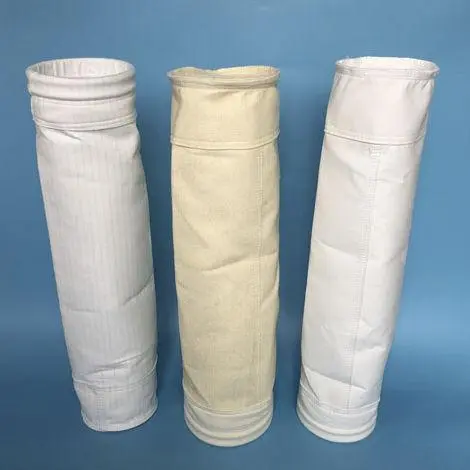
Summary Of Reasons For Low Efficiency Of Dust Removal Cloth Bag
When a dust collector starts losing efficiency, the cloth bag is usually the first place to look. Below is a practical, problem-focused summary of the most common real-world reasons for poor performance—plus a quick table for easy troubleshooting.
Key Reasons at a Glance
| Problem Area | Specific Cause | What Actually Happens | Quick Fix to Try |
|---|---|---|---|
| Bag material mismatch | Too fine or too coarse fabric | Dust passes through (low capture) or blinds quickly (high ΔP) | Match bag to dust particle size and gas temp |
| Excessive filtration velocity | Air-to-cloth ratio too high | Dust embeds deep instead of forming surface cake | Reduce flow rate or add more bags |
| Poor cleaning system | Low pressure, short pulse, wrong sequence | Dust bridges between bags; cake doesn’t release | Adjust pulse pressure (typical 60–80 psi), duration (100–150 ms) |
| Bag tension wrong | Too loose or too tight | Loose = sagging & abrasion; tight = torn seams | Follow mfg spec – usually 10–20 kg pull per bag |
| High humidity + condensation | Gas temp below dew point | Sticky dust cakes; bags “mud-caked” | Insulate housing; keep temp 15–20°C above dew point |
| Chemical corrosion | Acidic/alkaline gas + wrong fiber | Fiber embrittlement, pinholes | Switch to PTFE, PPS, or acrylic depending on pH |
| Leaks (tube sheet / cage) | Worn gaskets, bent cages | Dust bypasses bag → higher outlet emission | Smoke test; replace damaged cages & seals |
| Improper storage / install | UV exposure, folded storage, dragging on metal | Micro-cracks or holes before use | Inspect with light test before installation |
Most Overlooked Operational Cause
“Cleaning too often” – Many operators pulse-jet every 30 seconds. This prevents stable dust cake formation. Dust cake actually helps fine filtration. Instead, allow ΔP to reach 1000–1200 Pa before cleaning.
Quick Field Checklist (30 min)
- Check outlet stack – visible dust = leak or torn bag
- Feel bag top – hot spot = hole
- Look at hopper – lumpy, moist dust = humidity issue
- Listen to pulse – weak sound = diaphragm or pressure problem
- Take ΔP reading – too low (<500 Pa) = cleaning too frequent; too high (>1500 Pa) = blocked bag
When to Replace vs Repair
| Condition | Action |
|---|---|
| Small hole (<2 cm) + good surrounding fabric | Patch repair (for less critical duty) |
| Multiple holes, hard crust, fabric stiff/brittle | Replace entire row or full set |
| Only 2–3 bags bad | Replace individually, check neighbors for same damage pattern |
Most low efficiency cases trace back to velocity + cleaning + moisture. Fix those three first before buying new bags.